
Requirements connected to engineering
Requirements stay linked to architecture, models, risks, tests, and project data.
Live diagrams and documents
Changes made in one place are reflected across diagrams, documents, and reports.
Automated quality checks
Improve requirement quality with built-in analysis and AI-assisted review capabilities.
Complete lifecycle traceability
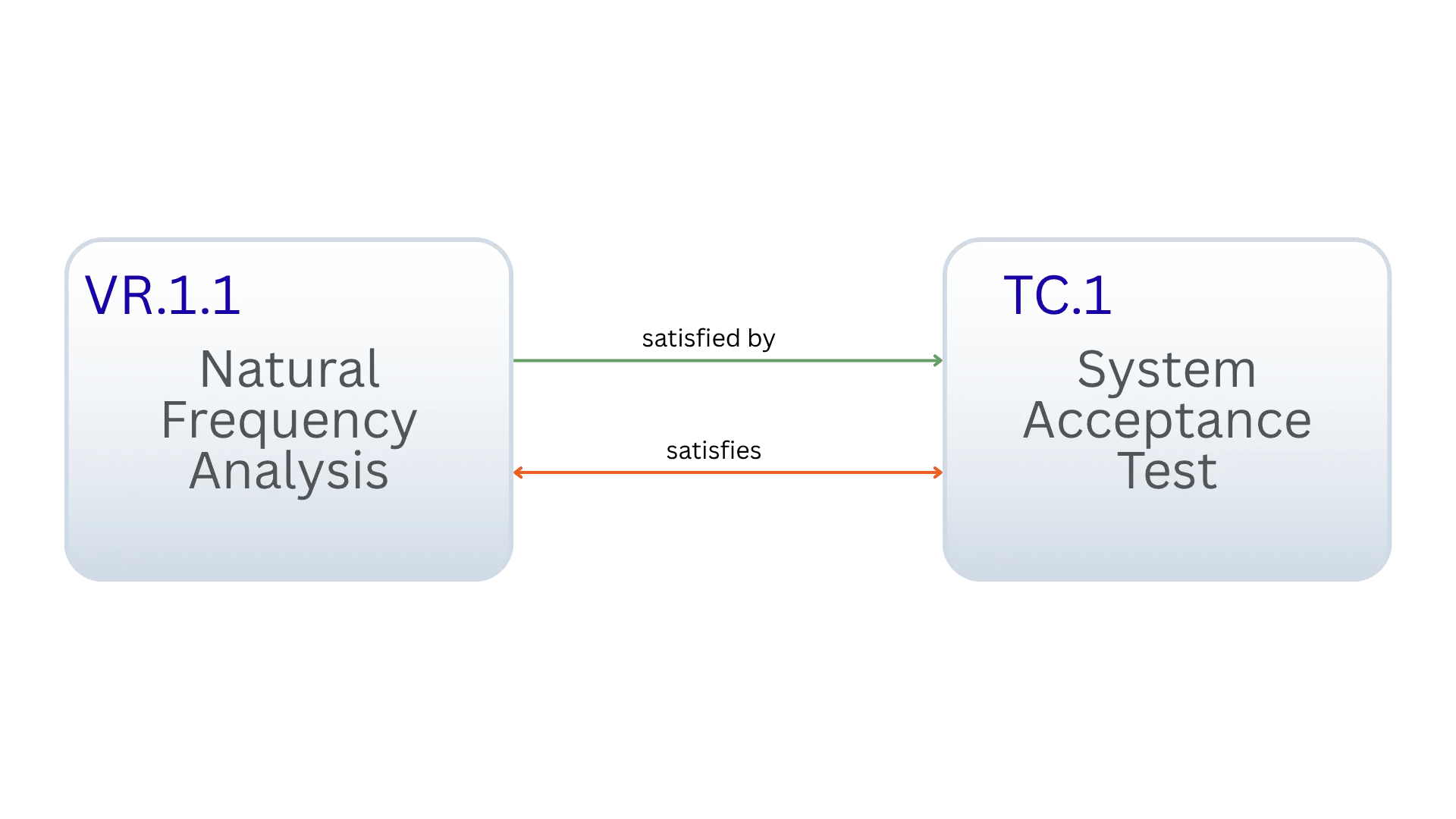
Trace every requirement from stakeholder need through verification and validation.
A modern solution to requirements
A cloud-native, AI-powered, and real-time collaborative solution to complex requirements.
AI-powered requirements
Improve requirement quality with built-in AI that identifies ambiguity, flags risks, and highlights gaps in real time.
- Traceability & Suspect Assist
- Quality Check
- Translate AI
- Summarize AI
- Text Prompt
- Image Generation
- Requirements Generation
Real-Time Collaboration
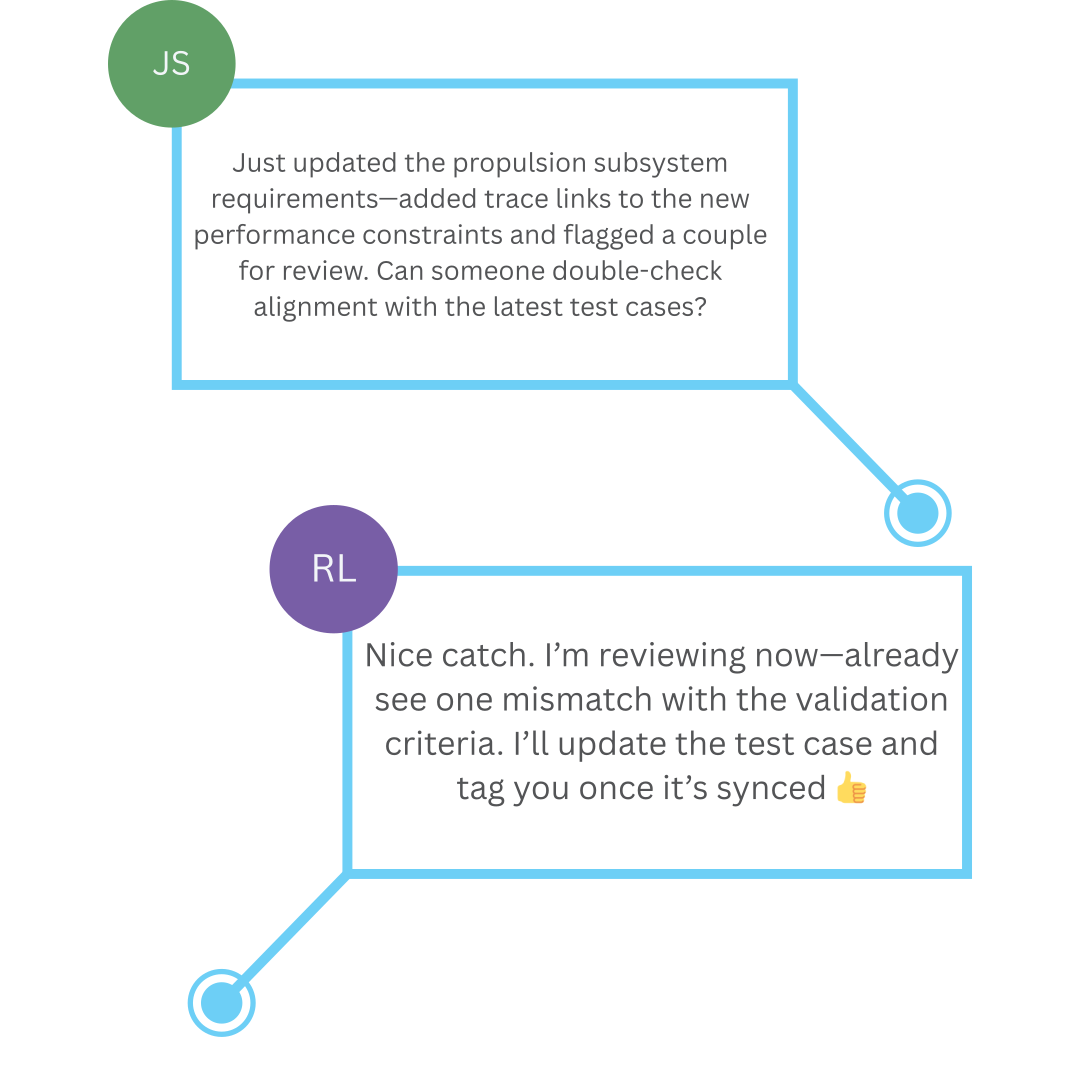
Work together in a shared, live environment where teams can edit, comment, and track changes instantly. Innoslate keeps everyone aligned with up-to-date requirements, reducing miscommunication and eliminating version conflicts.
- Tasking
- Notifications
- Comments
- Chat
- Activity Feed
- Permissions & Roles
- User Presence Indicator
Connected Engineering
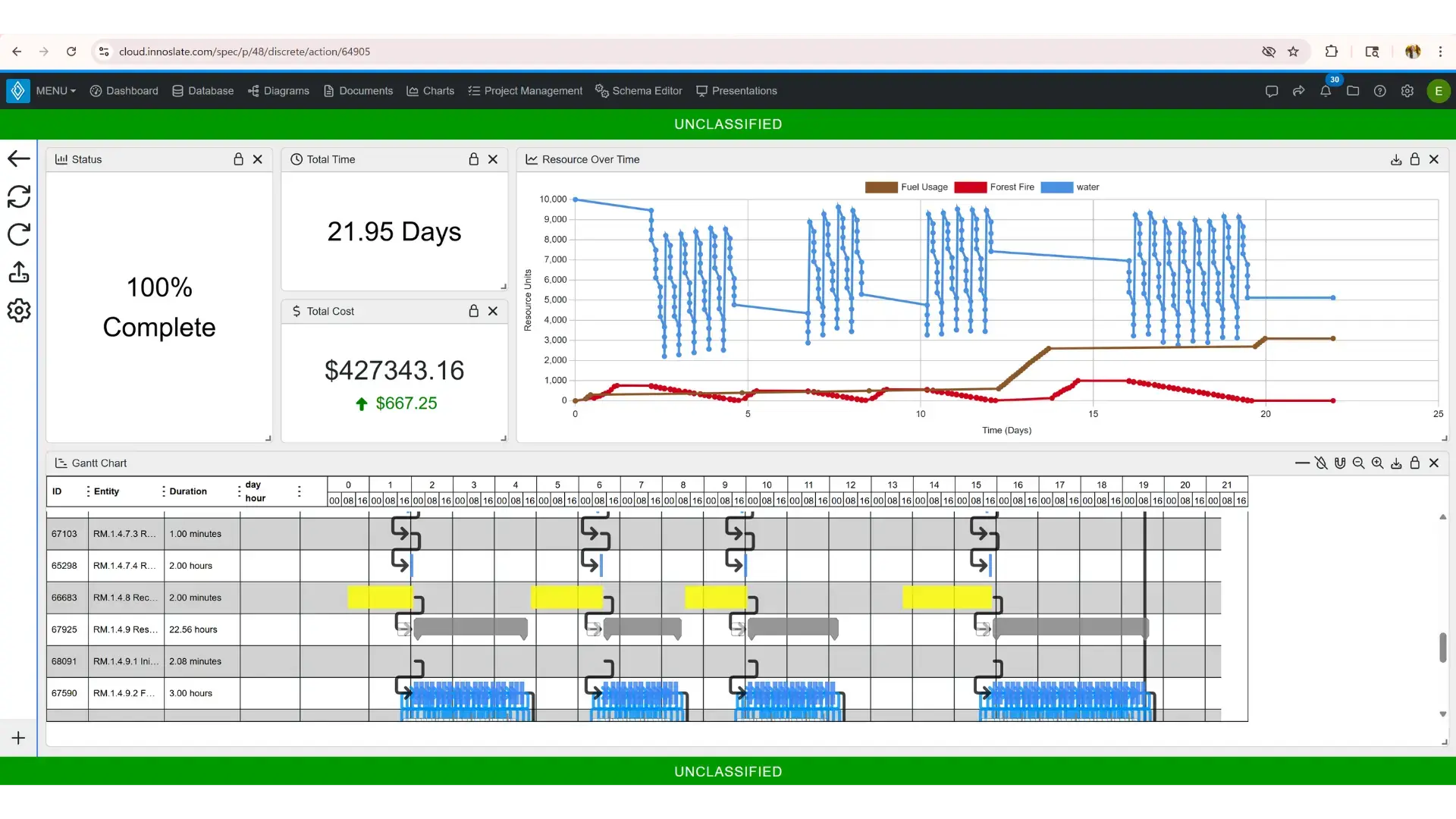
Requirements, functions, components, risks, and tasks all exist within a single schema.
Test Center
Innoslate makes it easy to perform both Test & Evaluation + Verification & Validation in one place.
Want to explore requirements management?
Learn requirements management and best practices in the requirements management hub.
More support
Beyond great service, SPEC Innovations offers a wide range of learning opportunities.
Community User Group
Seek advice and network with other Innoslate and Sopatra users.
Learning Hub
Take free on-demand courses and view paid training options led by expert engineers.
Frequently Asked Questions
-
What makes Innoslate different from traditional requirements management tools?
Innoslate connects requirements directly to system models, analyses, and test data in a single platform. This reduces tool switching and keeps your engineering data aligned throughout the lifecycle.
-
How does Innoslate support requirements traceability?
Requirements are linked to components, behaviors, and test cases, enabling full traceability from definition through validation. You can quickly navigate relationships and understand impacts across your system.
-
Can I import existing requirements into Innoslate?
Yes. Innoslate supports importing requirements from spreadsheets and other formats, making it easy to bring in existing data and organize it within a structured model.
-
How does Innoslate help improve requirement quality?
The Quality Checker analyzes requirements using built-in rules and natural language processing to identify vague language, missing information, and inconsistencies, helping teams create clear and testable requirements.
-
How are requirements verified in Innoslate?
Requirements can be linked to test cases within the platform, allowing teams to track verification status and ensure each requirement is validated throughout the system lifecycle.