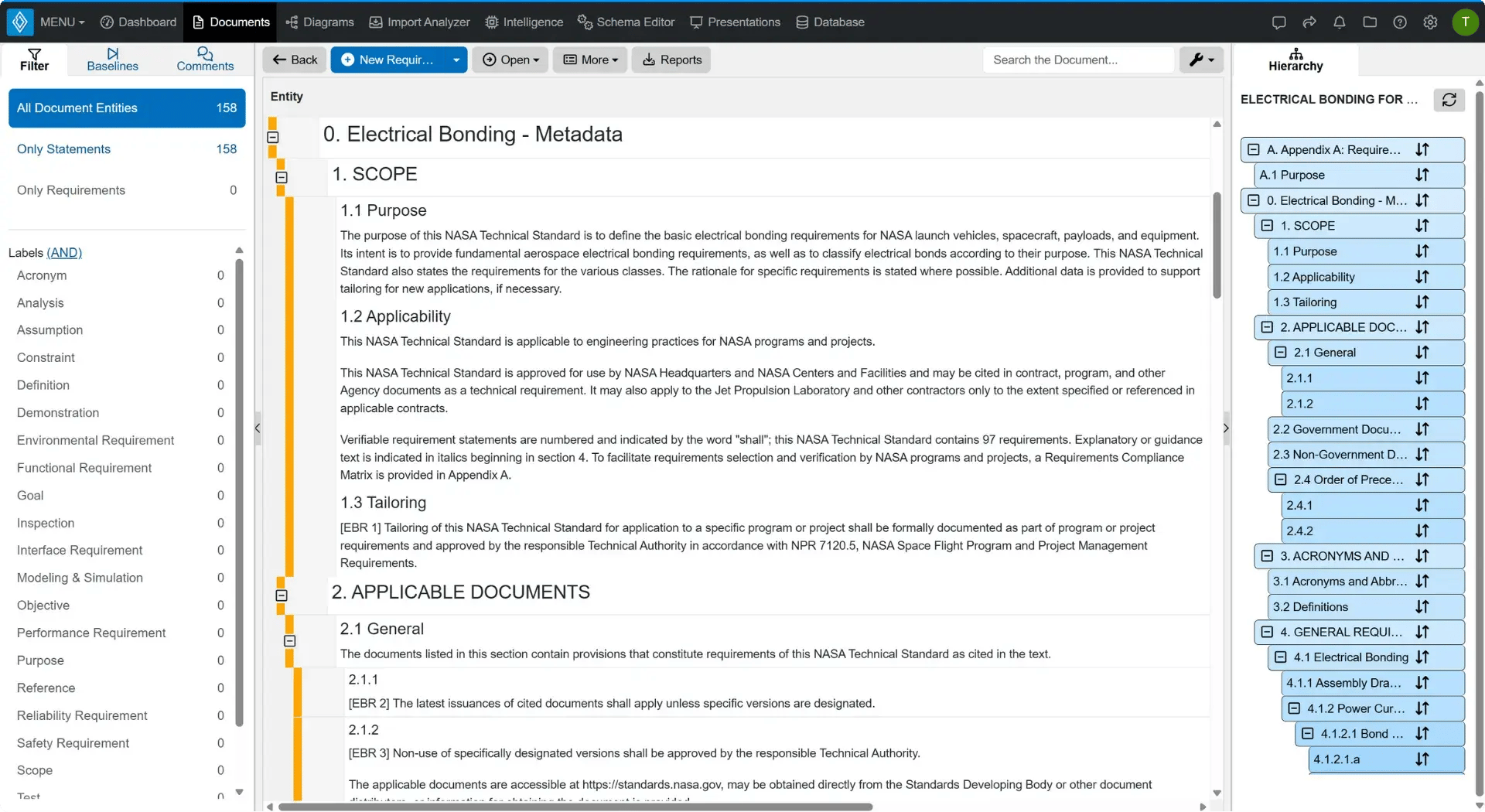
Define and manage electrical bonding requirements with precision and confidence. Discover a structured, model-driven representation of NASA’s electrical bonding standards, enabling teams to ensure safety, reliability, and compliance across launch vehicles, spacecraft, payloads, and flight equipment.
The Electrical Bonding for NASA Launch Vehicles, Spacecraft, Payloads, and Flight Equipment Government Reference Architecture (GRA) is a model-based representation of a NASA Technical Standard that defines electrical bonding requirements for aerospace systems.
What It Does
This GRA supports the design and validation of safe and reliable electrical systems in aerospace environments. It generally includes:
Bond classification: Defining different types of electrical bonds based on their purpose, such as grounding, shielding, and fault protection.
Requirements definition: Capturing detailed criteria for each bonding class to ensure proper implementation across systems.
Standards alignment: Translating NASA technical standards into structured, model-based artifacts for easier application and compliance.
Engineering rationale: Providing context and reasoning behind requirements to support informed design decisions.
Where You Might See This GRA?
NASA spacecraft and launch vehicle design programs
Aerospace electrical and systems engineering environments
Model-based systems engineering (MBSE) workflows for safety-critical systems
Electrical Bonding for NASA Launch Vehicles, Spacecraft, Payloads, and Flight Equipment Government Reference Architecture (GRA)
Provides a model-based framework for defining and classifying electrical bonding requirements to ensure safety, performance, and reliability across aerospace systems.
Accelerate Your Project With Model-Driven Electrical System Standards
Access a structured, traceable version of NASA’s electrical bonding standards to support safe, reliable aerospace system design.