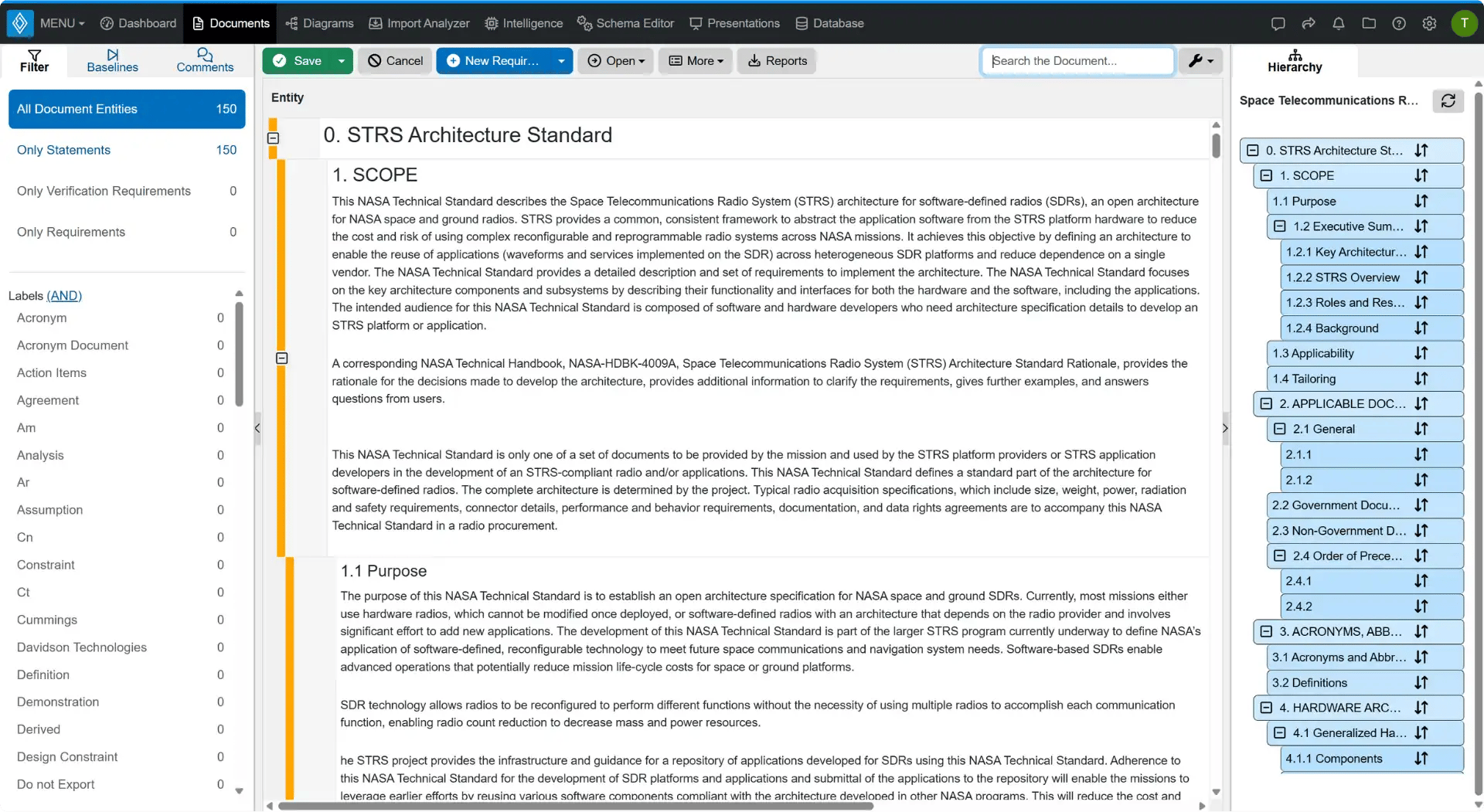
Design, standardize, and manage space-based communication systems with confidence. Discover a structured, model-driven approach to developing reconfigurable and interoperable radio systems aligned with NASA’s Space Telecommunications Radio System (STRS) framework.
The Space Telecommunications Radio System (STRS) Architecture Standard is a NASA-defined framework that establishes common design principles and interfaces for software-defined radios used in space systems.
What STRS Does
STRS enables flexible and scalable communication system development for space missions. It generally includes:
Modular architecture: Defining standardized components and interfaces that allow radio systems to be reconfigured and upgraded over time.
Interoperability: Ensuring compatibility across different platforms, missions, and vendors through consistent interface definitions.
Software-defined flexibility: Supporting waveform portability and reuse, enabling radios to adapt to changing mission needs.
Lifecycle efficiency: Reducing development time and cost by promoting reuse and standardization across programs.
Where You Might See STRS?
NASA space communication and avionics systems
Software-defined radio (SDR) development for space missions
Model-based systems engineering (MBSE) environments supporting aerospace systems
Specification Template Included
Request access to the following specification.
Space Telecommunications Radio System (STRS) Architecture Standard Template
Defines a standardized, modular framework for developing reconfigurable space-based radio systems, enabling interoperability, flexibility, and reuse across missions.
Accelerate Your Project With Model-Driven STRS Architecture
Receive a structured, traceable version of your STRS-aligned documentation built for aerospace and systems engineering best practices.