
.svg) Steven Dam
Steven Dam
9 Methods for Requirements Gathering
.svg) Elizabeth Steiner : 2/14/24, 10:16 AM
Elizabeth Steiner : 2/14/24, 10:16 AM
Establishing effective requirements is the foundation of successful project management and product development. Requirements Management provides a...
Agile development has transformed how organizations deliver software, systems, and products by emphasizing collaboration, adaptability, and continuous delivery. But while Agile encourages teams to embrace change, it does not eliminate the need for structured requirements management.
In fact, projects that operate in complex engineering environments, including defense, aerospace, automotive, and medical devices, often require even greater discipline to maintain traceability, compliance, and verification throughout development.
Agile requirements management is the practice of planning, documenting, organizing, prioritizing, and maintaining requirements throughout an Agile project while supporting iterative development and continuous stakeholder feedback.
Rather than treating requirements as static documents completed before development begins, Agile requirements management views them as evolving engineering assets that mature alongside the product.
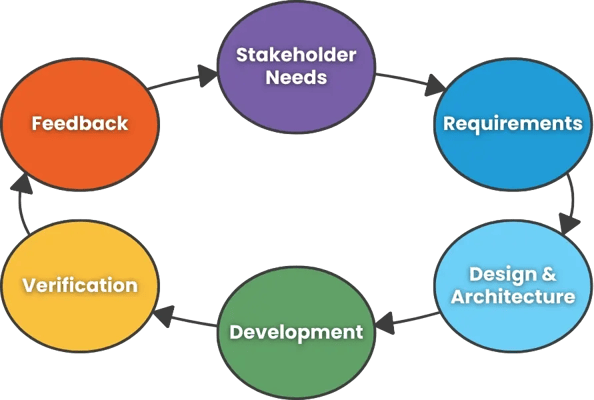
Agile requirements management is the ongoing process of capturing, refining, prioritizing, and tracing requirements as a project evolves.
Instead of producing a single comprehensive specification upfront, Agile teams develop requirements incrementally. High-level capabilities are broken into epics, features, and user stories that are continuously refined as additional information becomes available.
However, Agile does not mean requirements become informal or undocumented. Successful Agile teams still maintain:
Well-defined acceptance criteria
Version control
Traceability
Verification planning
Change history
The primary difference is that requirements evolve through collaboration rather than being frozen early in the lifecycle.
For organizations building complex systems, Agile requirements management provides flexibility without sacrificing engineering rigor.
Traditional waterfall development assumes that requirements can be fully defined before implementation begins. While this works for some projects, modern engineering programs frequently encounter:
Changing customer priorities
Emerging technologies
New regulatory requirements
Integration discoveries
Evolving operational environments
When requirements are managed as static documents, even small changes can become difficult to evaluate and communicate across teams.
Agile addresses this challenge by allowing requirements to evolve incrementally while maintaining visibility into what changed, why it changed, and how it affects the rest of the system.
| Traditional | Agile |
| Fixed requirements | Evolving requirements |
| Sequential phases | Iterative cycles |
| Heavy upfront planning | Continuous refinement |
| Limited feedback | Continuous stakeholder collaboration |
| Late validation | Frequent validation |
📖 Related Reading: Agile vs. Waterfall for Satellites: An MBSE Simulation in Innoslate
Effective agile requirements gathering is an ongoing activity rather than a one-time event.
Instead of collecting every requirement at project kickoff, Agile teams continuously gather feedback from stakeholders throughout development. Common techniques include:
User interviews
Workshops
Product demonstrations
Sprint reviews
Prototyping
Backlog refinement sessions
Operational feedback
Each iteration improves the team's understanding of user needs and helps ensure the highest-value capabilities are delivered first.
This collaborative approach reduces the risk of building features that no longer meet stakeholder expectations.
📖 Related Reading: 9 Methods for Requirements Gathering
One common misconception is that Agile eliminates documentation. The Agile Manifesto actually values working software over comprehensive documentation, not the absence of documentation altogether.
Industry guidance reinforces this point, emphasizing that Agile and requirements management are complementary disciplines. Successful Agile teams still rely on effective requirements analysis, documentation, and collaboration; they simply adapt these practices to support iterative delivery rather than treating requirements as fixed upfront.
Effective agile requirements documentation remains essential, particularly for regulated industries and systems engineering programs. Documentation often includes:
User stories
Epics
Features
Acceptance criteria
System requirements
Interface definitions
Architecture decisions
Verification methods
Traceability relationships
The goal is to produce documentation that delivers value rather than documentation created solely for compliance.
Every Agile framework manages requirements slightly differently, but most share several common principles.
Successful agile methodology requirements should be:
Clearly defined
Testable
Prioritized
Traceable
Small enough to deliver iteratively
Flexible enough to accommodate change
Requirements typically become progressively more detailed as implementation approaches, allowing teams to avoid excessive upfront planning while still maintaining engineering quality.
Software teams often work primarily with user stories, but engineering organizations typically manage multiple levels of requirements simultaneously. For example:
Stakeholder requirements define business or mission needs.
System requirements describe system behavior.
Subsystem requirements allocate functionality.
User stories guide implementation.
Test cases verify completion.
Agile development requirements should remain connected across every level of the engineering hierarchy.
Maintaining these relationships helps teams understand how implementation decisions affect the larger system while preserving end-to-end traceability.
Organizations adopting Agile requirements management often achieve the best results by following several proven practices.
Every requirement should remain connected to:
Stakeholder needs
Design decisions
Architecture
Verification activities
Test results
Traceability makes it easier to evaluate change impacts while supporting audits and compliance activities.
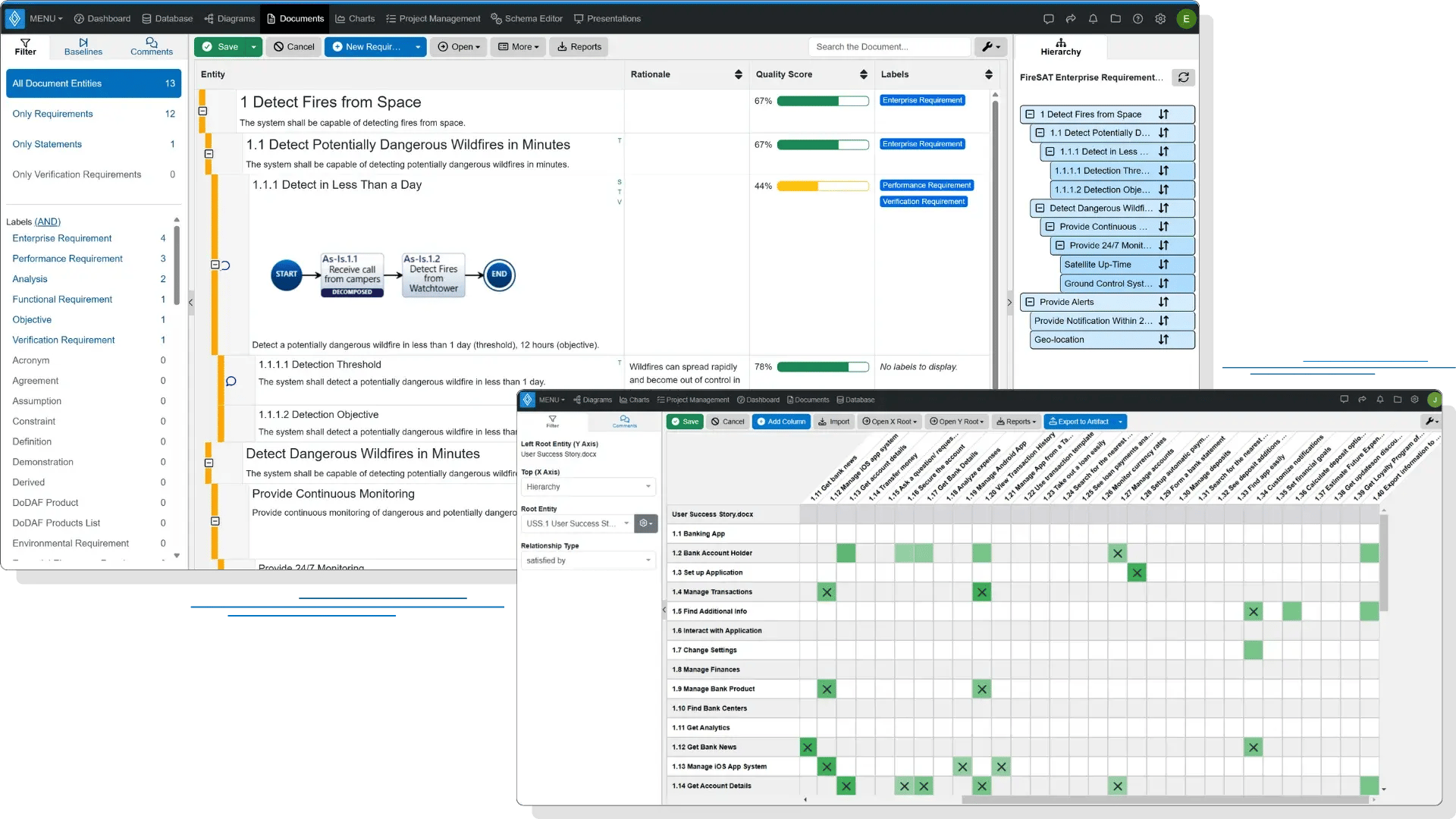
💡 Pro Tip: Innoslate has a Requirements Traceability Matrix that helps track requirements throughout the project lifecycle. Learn more
Requirements should be reviewed regularly rather than only during initial planning. As customer needs evolve, priorities may shift based on business value, technical risk, or program objectives.
Requirements improve through continuous communication. Product owners, engineers, testers, architects, and customers should all participate in refining requirements throughout development.
Every requirement should include measurable success criteria. Well-written acceptance criteria reduce ambiguity and provide a foundation for verification.
Change is expected in Agile. Instead of avoiding it, successful teams manage change by documenting why requirements changed, who approved them, and how those changes affect the rest of the project.
.webp)
Many organizations use an agile requirements template to standardize how information is captured. Templates help ensure consistency while still allowing flexibility.
A typical template may include:
Requirement or story title
Description
Business value
Acceptance criteria
Priority
Dependencies
Related requirements
Verification method
Status
Owner
Similarly, an agile requirements gathering template can help teams consistently document stakeholder interviews, workshops, assumptions, and decisions throughout discovery activities.
Standardized templates improve communication while reducing the risk of missing critical information.

Although Agile provides greater flexibility, organizations often encounter several common challenges.
Frequent changes can create confusion if updates are not communicated across teams.
Disconnected tools and spreadsheets make it difficult to understand how changes affect downstream activities.
Large engineering programs may involve thousands of interconnected requirements spanning multiple teams and suppliers. Without centralized requirements management, maintaining consistency becomes increasingly difficult.
Defense, aerospace, healthcare, and other regulated industries often require detailed documentation and verification evidence. Agile processes must still satisfy these regulatory expectations.
Modern requirements management platforms help organizations combine Agile flexibility with engineering discipline.
Rather than storing requirements in disconnected documents, centralized platforms allow teams to:
Capture requirements collaboratively
Maintain version history
Track changes automatically
Link requirements to architecture and design
Generate traceability matrices
Connect verification activities
Perform impact analysis
Support digital engineering initiatives
This connected approach creates a digital thread across the entire lifecycle, helping teams make informed decisions while adapting to changing requirements.
📑 Guide: Agile Application Lifecycle Management
For systems engineering organizations, Agile extends beyond software development. Modern programs often integrate software, hardware, electronics, mechanical systems, simulation models, and operational concepts within a single engineering effort.
As Agile practices have expanded beyond software into complex systems development, organizations have increasingly adapted systems engineering principles to support iterative planning, continuous integration, and lifecycle traceability.
Frameworks such as CESAMES' Agile Systems Engineering demonstrate how engineering rigor and Agile methodologies can work together in multidisciplinary environments.
Agile requirements management helps these multidisciplinary teams remain aligned by providing a shared source of truth throughout development.
When requirements remain connected to architecture, verification, risk management, and test planning, organizations gain greater visibility into program progress while reducing the cost of change.
📖 Related Reading: Agile Systems Engineering Using the Middle-Out Process
Agile requirements management is not about eliminating documentation or engineering discipline. It's about creating a flexible process that allows requirements to evolve while preserving the traceability, collaboration, and verification needed to deliver successful systems.
As products become more complex and stakeholder expectations continue to change, organizations need requirements management processes that support both adaptability and accountability.
Whether you're developing software, complex systems, or mission-critical products, combining Agile practices with structured requirements management can improve communication, reduce risk, and help teams deliver higher-quality outcomes.
Start a free Innoslate account to capture, organize, and trace requirements throughout your Agile development lifecycle. Collaborate with your team, manage change with confidence, and keep every requirement connected.

Elizabeth Steiner : 2/14/24, 10:16 AM
Establishing effective requirements is the foundation of successful project management and product development. Requirements Management provides a...

.svg) SPEC Innovations Team : 11/6/25, 5:03 PM
SPEC Innovations Team : 11/6/25, 5:03 PM
Smart systems engineering is no longer just about building a model. In modern digital engineering environments, teams are expected to deliver...

SPEC Innovations Team : 10/6/26, 3:46 PM
Before a team can design the right system, product, or solution, it needs to understand what stakeholders actually need. That sounds straightforward,...