Successful requirements gathering depends on more than documenting what a system needs to do. It depends on getting the right people involved, understanding their needs, resolving competing priorities, and building enough trust that stakeholders support the requirements being developed.
Strong stakeholder requirements are created through collaboration. When stakeholders participate in elicitation, review, prioritization, and validation, teams are more likely to uncover the real need behind a request and turn it into requirements that are clear, useful, and aligned with project objectives.
For systems engineers, business analysts, project managers, product owners, and engineering managers, stakeholder buy-in should therefore be treated as part of the requirements process, not something to secure after requirements have already been written.
Why is stakeholder buy-in important?
Stakeholders are the people or organizations that influence a project, are affected by it, or have an interest in its outcome. Their perspectives shape what the system ultimately needs to accomplish.
SEBoK distinguishes stakeholder needs from stakeholder requirements: needs capture stakeholders' wants, expectations, and constraints, while stakeholder requirements transform those needs into more formal statements that can guide system development.
That transformation requires active stakeholder collaboration and a structured requirements management process that keeps stakeholder needs connected to project objectives.
If teams gather requirements without meaningful stakeholder participation, they risk documenting assumptions rather than actual needs. Missing or misunderstood needs can later surface as conflicting requirements, scope changes, failed reviews, or expensive rework.
Stakeholder involvement also creates ownership. In a conference paper published by the Project Management Institute (PMI), Michele Maritato emphasizes the importance of continuously listening to stakeholders' needs throughout a project and identifying changes to their requirements.
In other words, stakeholders are more likely to support requirements when they understand how and why those requirements were created.
.webp?width=910&height=220&name=How%20to%20Gain%20Stakeholder%20Buy-In%20During%20Requirements%20Gathering%20Steps%20(1).webp)
1. Identify the right stakeholders early
Before beginning requirements elicitation, identify everyone who can provide important information or influence the project's outcome. Depending on the project, that could include:
👥 Customers and end users
🏅 Project sponsors
🚀 Systems engineers
👨💼 Product owners
👩💻 Developers and technical leads
✅ Verification and validation teams
🔧 Operations and maintenance personnel
📜 Regulatory or compliance representatives
🚚 Suppliers and external partners
Don't limit the list to the most visible decision-makers. People who use, maintain, test, regulate, or otherwise interact with the eventual system may uncover needs that executives and project leaders cannot see.
The Institute of Project Management similarly emphasizes identifying stakeholders and understanding factors such as their interests and influence on a project.
Once you identify stakeholders, determine their influence, responsibilities, concerns, decision authority, and definition of project success. This helps teams decide who needs to participate in each requirements activity.
📖 Related Reading: Stakeholder Roles in Requirements Management
2. Set expectations before elicitation begins
Stakeholder buy-in becomes harder when participants have different assumptions about what the requirements process is supposed to accomplish.
Before conducting stakeholder interviews, workshops, surveys, or other elicitation activities, explain:
-
The project's goals and boundaries
-
What information you need from participants
-
How requirements will be documented
-
Who can approve or change requirements
-
How priorities will be determined
-
How conflicts will be resolved
-
When stakeholders will review and validate the results
Establishing this requirements management framework early gives stakeholders visibility into how their input will be evaluated, documented, prioritized, and approved, providing a shared process rather than treating requirements gathering as a series of disconnected conversations.
It also helps manage stakeholder expectations. A stakeholder can have an important need without every requested feature automatically becoming an approved requirement. Establishing that distinction early makes later prioritization conversations much easier.
📖 Related Reading: 8 Ways to Manage Unrealistic Stakeholder Expectations
3. Use stakeholder interviews to uncover the need behind the request
Stakeholders often describe solutions rather than needs. For example, a stakeholder might say, "We need a dashboard that refreshes every five seconds."
Instead of immediately recording that statement as a requirement, ask why. Perhaps the stakeholder need is to detect a critical operational change within 30 seconds. That underlying need may have several possible technical solutions.
Effective requirements elicitation uncovers this deeper context. The requirements process therefore needs to identify those needs and translate them into implementable requirements.
Useful questions during stakeholder interviews include:
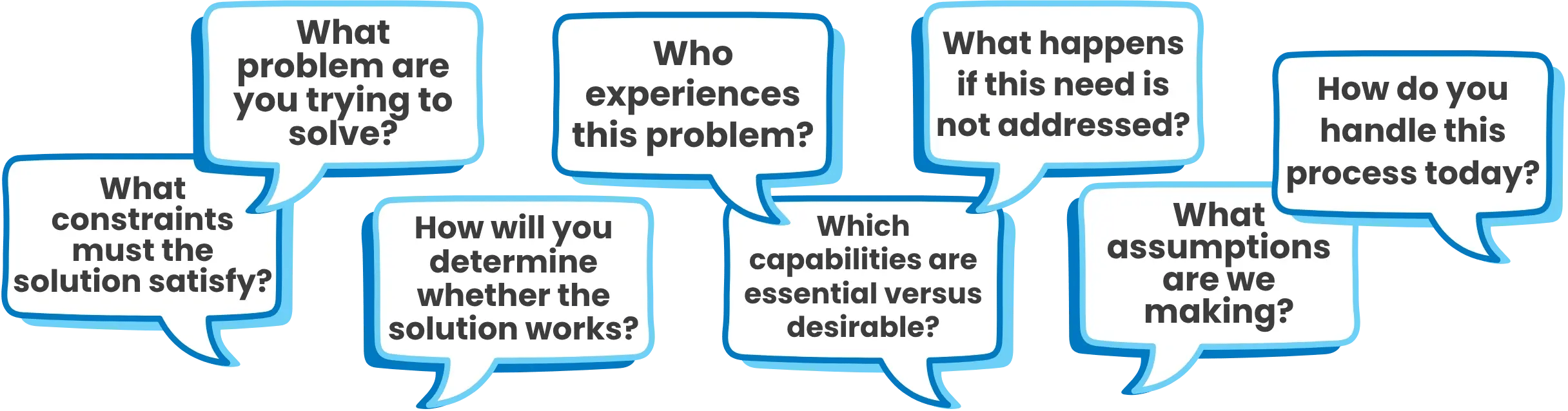
Follow-up questions often reveal the most valuable requirements.
📖 Related Reading: How to Write Agile Stories for Requirements Gathering
4. Make requirements gathering collaborative
Individual interviews are useful, but requirements should not remain isolated within individual stakeholder groups. Bring stakeholders together when appropriate through workshops, requirements reviews, demonstrations, and collaborative prioritization sessions.
Collaboration allows participants to hear perspectives they might otherwise miss. A product owner may prioritize user experience, for example, while an engineer raises technical constraints and a compliance representative identifies a mandatory regulatory requirement.
Those conversations expose dependencies and conflicts early.
Elicit stakeholder needs through techniques such as interviews, workshops, surveys, and observation before translating those needs into actionable requirements.
The objective is not to make every stakeholder agree on every detail. It is to create a transparent process in which participants understand how decisions are made.
5. Resolve conflicting stakeholder priorities transparently
Conflicting priorities are normal. One stakeholder may want additional functionality while another prioritizes schedule. Engineering may want flexibility while compliance requires tighter controls. Users may want simplicity while administrators need additional configuration.
Trying to avoid these disagreements usually postpones them. Instead, document conflicts and evaluate them against agreed criteria such as business value, user impact, safety, regulatory obligations, technical feasibility, cost, schedule, risk, dependencies, and project scope.
Traceability can be especially useful here. In his conference paper published by the Project Management Institute, Maritato argues that solution and transition requirements should remain connected to the business and stakeholder requirements from which they are derived. This helps teams focus implementation on requirements that contribute to business value.
When a decision is made, capture the rationale. Stakeholders may not receive their preferred outcome, but they should be able to understand why the decision was made. That transparency helps preserve trust.
📖 Related Reading: How to Prioritize Requirements Without Losing Stakeholder Alignment
6. Confirm what you heard
Never assume that documenting a stakeholder's comments means you understood them correctly. After elicitation, review the resulting requirements with the people who provided the input. Ask:
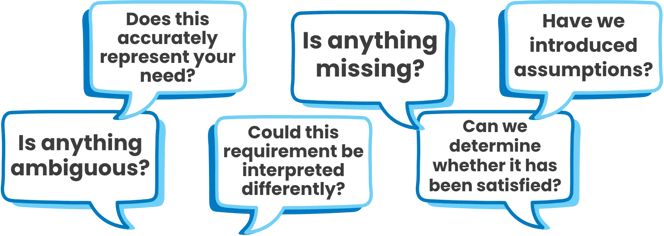
Conduct formal stakeholder review sessions to validate that documented requirements accurately reflect stakeholder needs and expectations, while maintaining a feedback loop as those requirements evolve.
This feedback loop improves requirement quality while showing stakeholders that their input was actually incorporated into the process. In a strong requirements management process, you can also trace that feedback back to the stakeholder need or requirement it affects.
📖 Related Reading: How to Involve Stakeholders in Requirements Validation
Stakeholder engagement should not stop when the first requirements baseline is complete. Requirements evolve as teams learn more about the system, constraints change, risks emerge, and stakeholders refine their understanding of what they need.
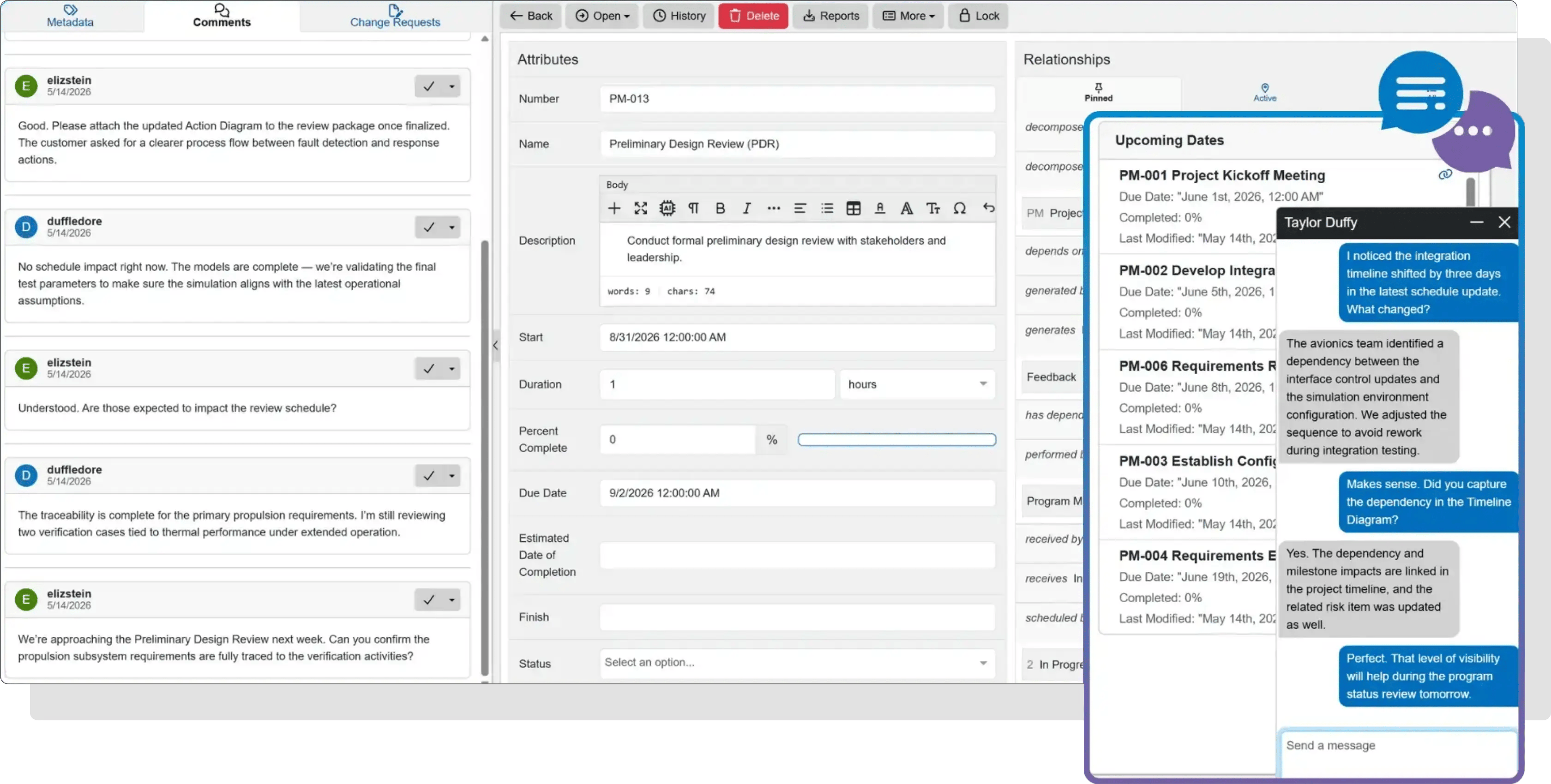
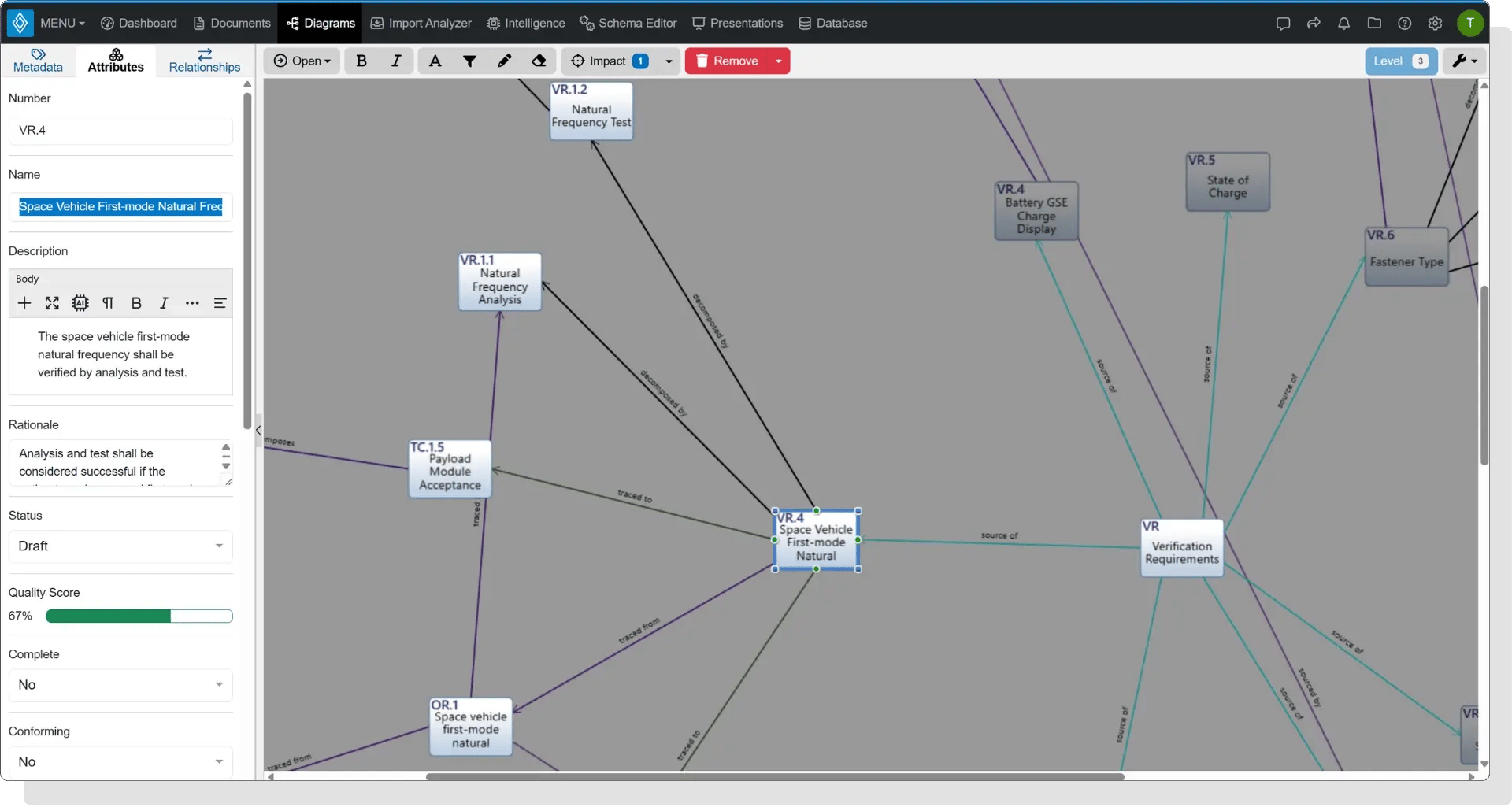
This is where connected requirements management becomes especially valuable. Rather than maintaining stakeholder feedback, requirements, decisions, and verification information in disconnected documents, teams can maintain relationships between them throughout the lifecycle.
Good requirements are not simply well-written sentences. They accurately represent a real need and provide enough clarity for teams to design, implement, and verify the right solution.
Collaboration improves that quality because different stakeholders identify different gaps.
End users understand operational needs. Engineers identify feasibility concerns. Test teams expose requirements that cannot be objectively verified. Project managers identify scope and schedule implications. Regulatory experts identify compliance constraints.
Stakeholder buy-in isn't created by asking for approval at the end of requirements gathering. It develops throughout the process.
Identify stakeholders early. Set clear expectations. Ask questions that uncover underlying needs. Collaborate across stakeholder groups. Resolve competing priorities transparently. Confirm requirements with the people who provided them, and keep those stakeholders involved as requirements evolve.
Doing so turns requirements gathering from a documentation exercise into a collaborative decision-making process.
Connected requirements management can make that collaboration easier by keeping stakeholder needs, requirements, changes, decisions, and verification activities linked in one environment.
Create your Free Forever Sandbox.



.svg) SPEC Innovations Team : 6/13/24, 1:37 PM
SPEC Innovations Team : 6/13/24, 1:37 PM
.jpeg)
.svg)

.svg)