9 Methods for Requirements Gathering
.svg) Elizabeth Steiner : 2/14/24, 10:16 AM
Elizabeth Steiner : 2/14/24, 10:16 AM
Establishing effective requirements is the foundation of successful project management and product development. Requirements Management provides a...
Before a team can design the right system, product, or solution, it needs to understand what stakeholders actually need. That sounds straightforward, but turning stakeholder needs into clear, actionable requirements involves more than simply collecting information.
Two important activities in this process are requirements gathering and requirements analysis. Although the terms are sometimes used interchangeably, requirements gathering and requirements analysis serve different purposes.
Requirements gathering focuses primarily on discovering and collecting stakeholder needs, expectations, constraints, and other relevant information. Requirements analysis takes that information further by evaluating, refining, prioritizing, and validating it so the team can develop requirements that support the intended system.
Understanding requirements gathering vs. requirements analysis can help systems engineers, requirements engineers, business analysts, project managers, and product teams build a stronger foundation for the rest of the requirements lifecycle.
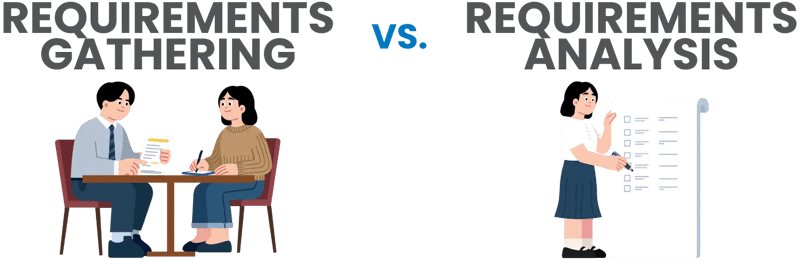
Requirements gathering is the process of collecting information about what stakeholders need or expect from a system, product, or project.
It is closely related to requirements elicitation, which focuses on uncovering needs and constraints from stakeholders and other sources. Gathering can include information that stakeholders explicitly provide, while elicitation often requires asking questions, facilitating discussions, and examining the operational environment to uncover needs that may not initially be obvious.
Teams can gather requirements using methods such as:
Stakeholder interviews
Workshops and brainstorming sessions
Surveys and questionnaires
Observation
Document analysis
Prototyping
Interface analysis
Existing system or process reviews
The goal at this stage is to understand the problem space as thoroughly as possible.
For example, imagine a team developing a new unmanned vehicle. During requirements gathering, stakeholders might say the vehicle needs to operate for extended periods, communicate with a control station, withstand certain environmental conditions, and carry a specified payload.
Those statements provide valuable information, but they may not yet be detailed, measurable, consistent, or ready for design.
That is where requirements analysis comes in.
📖 Related Reading: AI Tools for Requirements Gathering
Requirements analysis is the process of examining collected requirements and stakeholder needs to determine whether they are complete, clear, feasible, consistent, necessary, and appropriate for the intended system.
TechTarget describes requirements analysis, or requirements engineering, as the process of determining user expectations for a new or modified product and notes that requirements should be detailed, relevant, and quantifiable.
During analysis, teams move beyond asking, “What do stakeholders want?” and begin asking questions such as:
What does this requirement actually mean?
Is it measurable and verifiable?
Does it conflict with another requirement?
Is anything missing?
Is the requirement technically feasible?
How important is it?
What other requirements or system elements does it affect?
Can the requirement be tested or otherwise verified?
Consider the unmanned vehicle example. A stakeholder might initially say, “The vehicle needs to operate for a long time.” That statement communicates a need, but it is too ambiguous to guide design or verification.
Through analysis, the team might determine what “a long time” means in the intended operational context and refine it into a measurable requirement specifying a minimum operating duration under defined conditions.
Analysis turns collected information into requirements the engineering team can actually work with.
.webp?width=1920&height=1068&name=Innoslate%20Quality%20Checker%20(1).webp)
📖 Webinar: Meet INCOSE's Guide to Writing Requirements With AI Quality Checker
The simplest distinction is this: Requirements gathering identifies and captures what stakeholders need. Requirements analysis determines what those needs mean and whether the resulting requirements are suitable for development.
| Requirements Gathering | Requirements Analysis | |
| Primary purpose | Discover and collect needs | Evaluate and refine requirements |
| Main question | What do stakeholders need? | What does the system actually need to do? |
| Typical activities | Interviews, workshops, observation, surveys, document reviews | Reviewing, modeling, prioritizing, resolving conflicts, checking quality |
| Primary participants | Stakeholders, users, analysts, engineers | Analysts, engineers, architects, stakeholders |
| Typical outputs | Stakeholder needs, notes, source material, candidate requirements | Refined, prioritized, measurable, traceable requirements |
Both activities are essential. Gathering without analysis can leave teams with ambiguous or conflicting information. Analysis without effective gathering can result in technically polished requirements that fail to represent actual stakeholder needs.
📖 Related Reading: The Cost of Bad Requirements

There is not always a clean dividing line. Requirements gathering typically occurs early in the requirements lifecycle, but gathering and analysis can overlap and repeat throughout development.
For example, analysis may reveal that an important piece of information is missing. The team may then return to stakeholders for another interview or workshop. That new information may reveal additional needs that require further analysis.
This creates an iterative process:

PMI similarly treats gathering and elicitation, analysis, and definition as interconnected parts of requirements development rather than unrelated activities. Effective requirements management also continues beyond initial development to include verification and change management.
For complex systems in particular, teams should expect requirements to mature as their understanding of the system, stakeholders, constraints, and operating environment improves.
📖 Related Reading: How to Verify and Validate Requirements
Requirements gathering and analysis are only part of the larger requirements engineering process.
Elicitation and gathering help teams discover stakeholder needs, constraints, assumptions, and expectations.
Analysis evaluates that information, identifies gaps or conflicts, and transforms stakeholder input into clearer and more actionable requirements.
Validation helps determine whether the requirements accurately represent stakeholder needs and whether the team is specifying the right system. Teams may review requirements with stakeholders, use models or prototypes, evaluate operational scenarios, and perform other validation activities.
Requirements management connects these activities across the lifecycle by helping teams document requirements, maintain traceability, control changes, manage relationships, and monitor requirement status.
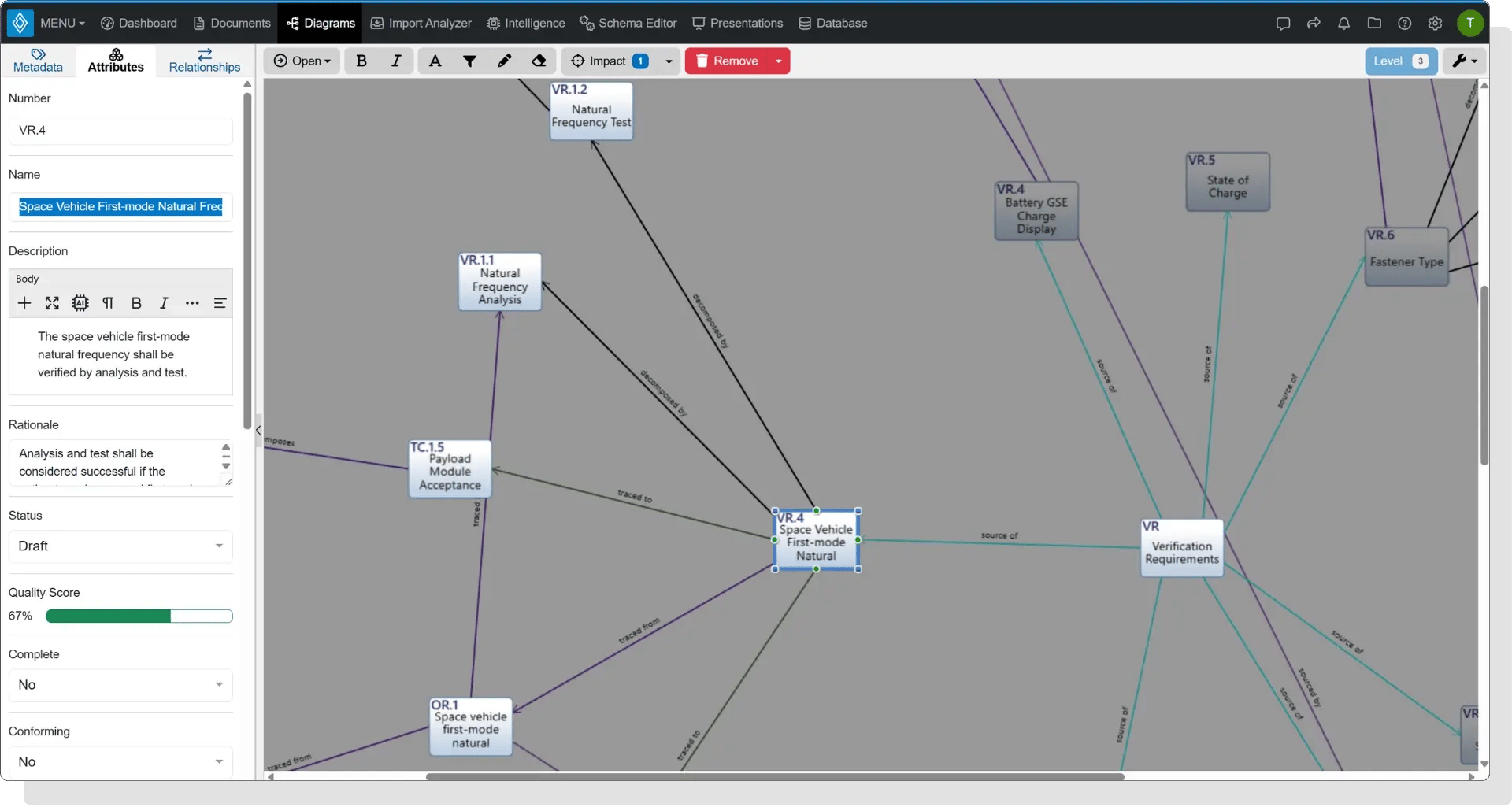
This connection matters because requirements do not exist in isolation. A stakeholder need may lead to a system requirement, which may decompose into lower-level requirements and connect to architecture, verification methods, risks, tests, and other engineering information.
Maintaining those relationships helps teams understand not only what a requirement says, but also where it came from and what it affects.
📖 Related Reading: How to Build End-to-End Traceability
Teams do not need to wait until every possible stakeholder need has been collected before beginning analysis. In fact, starting analysis earlier can expose missing information while stakeholders and source material are still readily available.
It may be time to begin deeper analysis when:
Key stakeholders and requirement sources have been identified.
The team understands the primary goals and intended use of the system.
Major stakeholder needs and constraints have been captured.
Enough information exists to begin identifying gaps, conflicts, dependencies, and ambiguities.
The team can start evaluating requirements for quality, feasibility, priority, and verifiability.
Analysis may then lead directly back to additional gathering.
The objective is not to complete one activity and permanently move to the next. It is to progressively improve the team's understanding of what needs to be built and why.
📖 Related Reading: How to Gain Stakeholder Buy-In During Requirements Gathering
Requirements gathering is where teams begin understanding the problem. Requirements analysis is where that understanding becomes clearer, more structured, and more actionable.
Keeping the two activities connected can help prevent stakeholder needs from becoming disconnected from the requirements, models, decisions, and verification activities that follow.
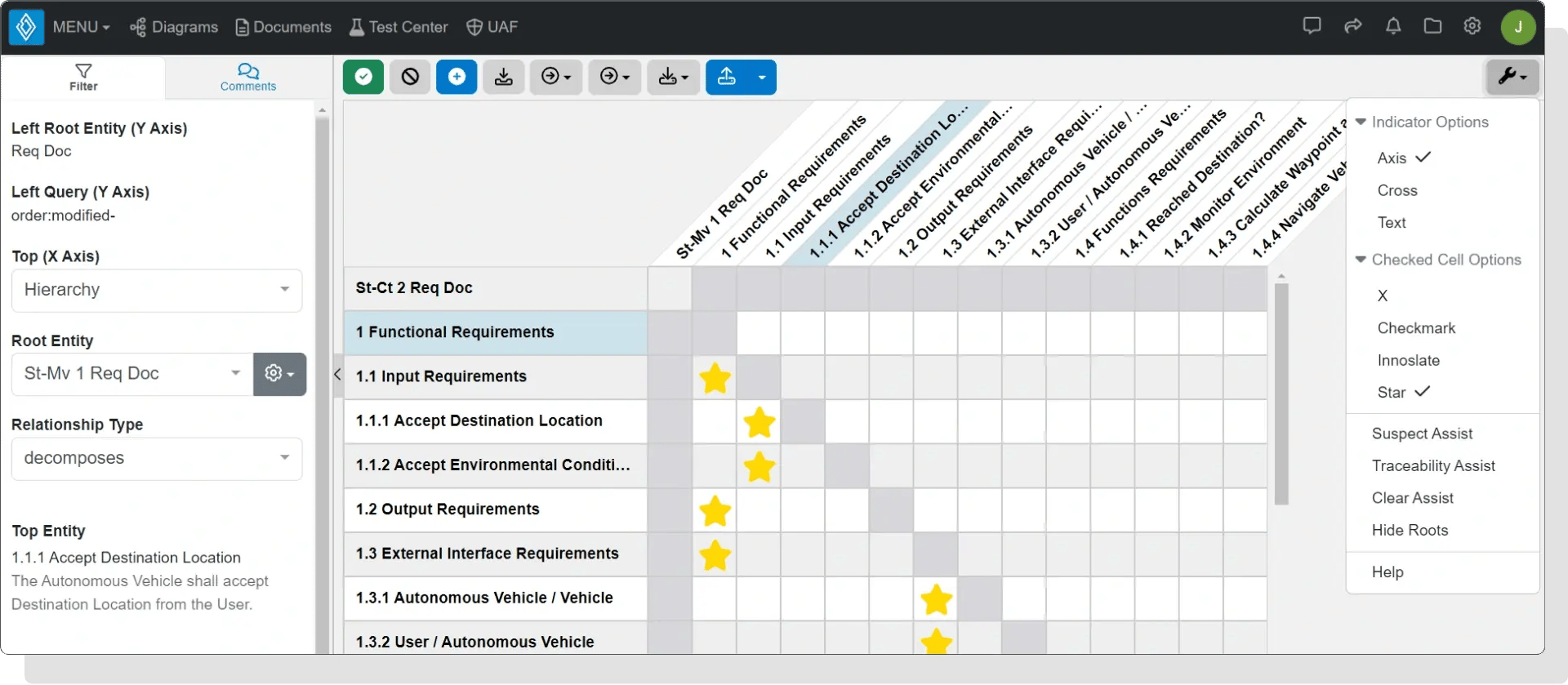
Innoslate gives teams a connected environment for capturing, analyzing, managing, and tracing requirements throughout the engineering lifecycle. Instead of moving information between disconnected documents and spreadsheets, teams can maintain relationships between stakeholder needs, requirements, models, risks, tests, and other lifecycle information in one environment.
As requirements evolve, those connections also make it easier to understand the potential impact of a change and maintain traceability from the original stakeholder need through verification and validation.
Try the Free Forever Sandbox.

Elizabeth Steiner : 2/14/24, 10:16 AM
Establishing effective requirements is the foundation of successful project management and product development. Requirements Management provides a...
.svg) SPEC Innovations Team : 11/6/25, 5:03 PM
SPEC Innovations Team : 11/6/25, 5:03 PM
Smart systems engineering is no longer just about building a model. In modern digital engineering environments, teams are expected to deliver...
.svg) Steven Dam : 6/24/26, 12:55 PM
Steven Dam : 6/24/26, 12:55 PM
A single poorly written requirement can seem harmless during planning. In fact, many bad requirements go unnoticed at first because they appear...