
How to Build End-to-End Traceability
.svg) Steven Dam : 7/20/26, 1:45 PM
Steven Dam : 7/20/26, 1:45 PM
Modern engineering projects generate thousands of interconnected pieces of information. Stakeholder needs evolve, requirements change, architectures...
Requirements are the foundation of every successful systems engineering project. When requirements are incomplete, ambiguous, or disconnected from the rest of the engineering lifecycle, teams spend valuable time correcting errors, managing changes, and resolving inconsistencies.
Improving requirements quality has become a critical part of engineering lifecycle management, ensuring that decisions remain connected from concept and design through verification, operations, and sustainment.
Digital engineering changes this process by connecting requirements with architecture, verification activities, simulations, and other engineering artifacts inside a shared digital environment. Instead of requirements existing as isolated documents, they become living data that evolves alongside the system.
Whether you're developing aerospace, defense, automotive, or other complex systems, digital engineering provides the visibility and traceability needed to produce higher-quality requirements from the very beginning.
In modern systems engineering, digital engineering connects requirements with architecture, verification, and other engineering data. Digital engineering requirements are requirements that exist within a connected digital engineering environment rather than standalone documents or spreadsheets.
Rather than being stored in disconnected files, each requirement can be linked to stakeholder needs, system architecture, interfaces, design decisions, verification methods, test cases, risks, simulations, configuration baselines, and more.
These relationships create a digital thread that allows engineers to understand how every requirement contributes to the overall system.
This approach is one of the core principles outlined in the Department of Defense Digital Engineering Strategy, which encourages organizations to move from document-centric practices toward an integrated, authoritative source of engineering information.
Poor requirements are one of the leading causes of delays, cost overruns, and rework in systems engineering programs, particularly those involving complex products and mission-critical systems. Common problems include:
Ambiguous language
Missing acceptance criteria
Duplicate requirements
Conflicting stakeholder needs
Poor traceability
Uncontrolled requirement changes
These issues become increasingly expensive as projects progress through design, implementation, and testing.
High-quality requirements should be clear, complete, consistent, verifiable, traceable, testable, and necessary.
.webp?width=1920&height=1068&name=Innoslate%20Quality%20Checker%20(1).webp)
Digital engineering helps organizations achieve these qualities by making requirements part of a connected engineering ecosystem instead of isolated documents. This connected approach strengthens engineering lifecycle management by ensuring requirements remain linked to the architecture, verification activities, and engineering decisions that support the system throughout its lifecycle.
📖 Related Reading: The Cost of Bad Requirements
One of the greatest advantages of digital engineering is complete requirements traceability. Instead of manually maintaining traceability matrices, relationships are created directly between engineering artifacts.
For example, a stakeholder need can connect to:

When every relationship is visible, teams can quickly answer questions like:
Why does this requirement exist?
What design satisfies it?
Which tests verify it?
What happens if it changes?
This level of visibility dramatically reduces missed requirements and improves confidence throughout the project lifecycle.
📖 Related Reading: How to Build End-to-End Traceability
Traditional requirements reviews often happen in documents that are emailed between teams.
Digital engineering enables stakeholders, systems engineers, software engineers, testers, and program managers to collaborate within the same environment. Instead of reviewing static documents, teams can:
Comment directly on requirements
Review linked diagrams
Discuss proposed changes
Resolve issues earlier
Maintain revision history
This collaborative workflow helps identify vague or conflicting requirements before development begins.
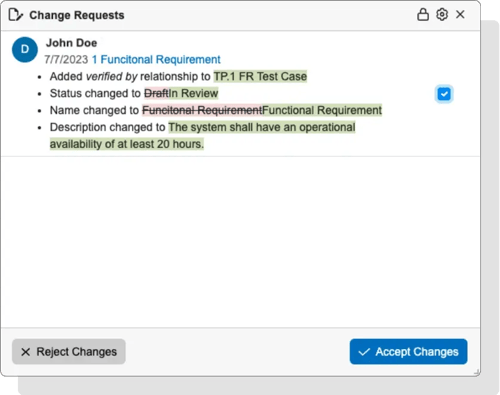
Verification should not begin only after development is complete. Within a digital engineering environment, every requirement can be connected to its planned verification method.
Examples include inspection, demonstration, analysis, and test.
As designs evolve, engineers can immediately see whether every requirement still has an associated verification activity. This improves planning while reducing the risk of discovering verification gaps late in the program.
📖 Related Reading: Plan Verification & Validation Early in the Lifecycle
Requirements rarely stay the same throughout a project. New stakeholder needs, evolving regulations, technology updates, and customer feedback all introduce changes. Without connected data, understanding the impact of a single requirement change can take days.
Digital engineering allows teams to perform impact analysis almost instantly. Engineers can identify:
Downstream requirements
Linked architecture
Affected interfaces
Verification procedures
Test cases
Risks
Documents that require updates
This reduces rework while improving confidence that changes have been implemented correctly.
📖 Related Reading: How to Manage Changes to Requirements
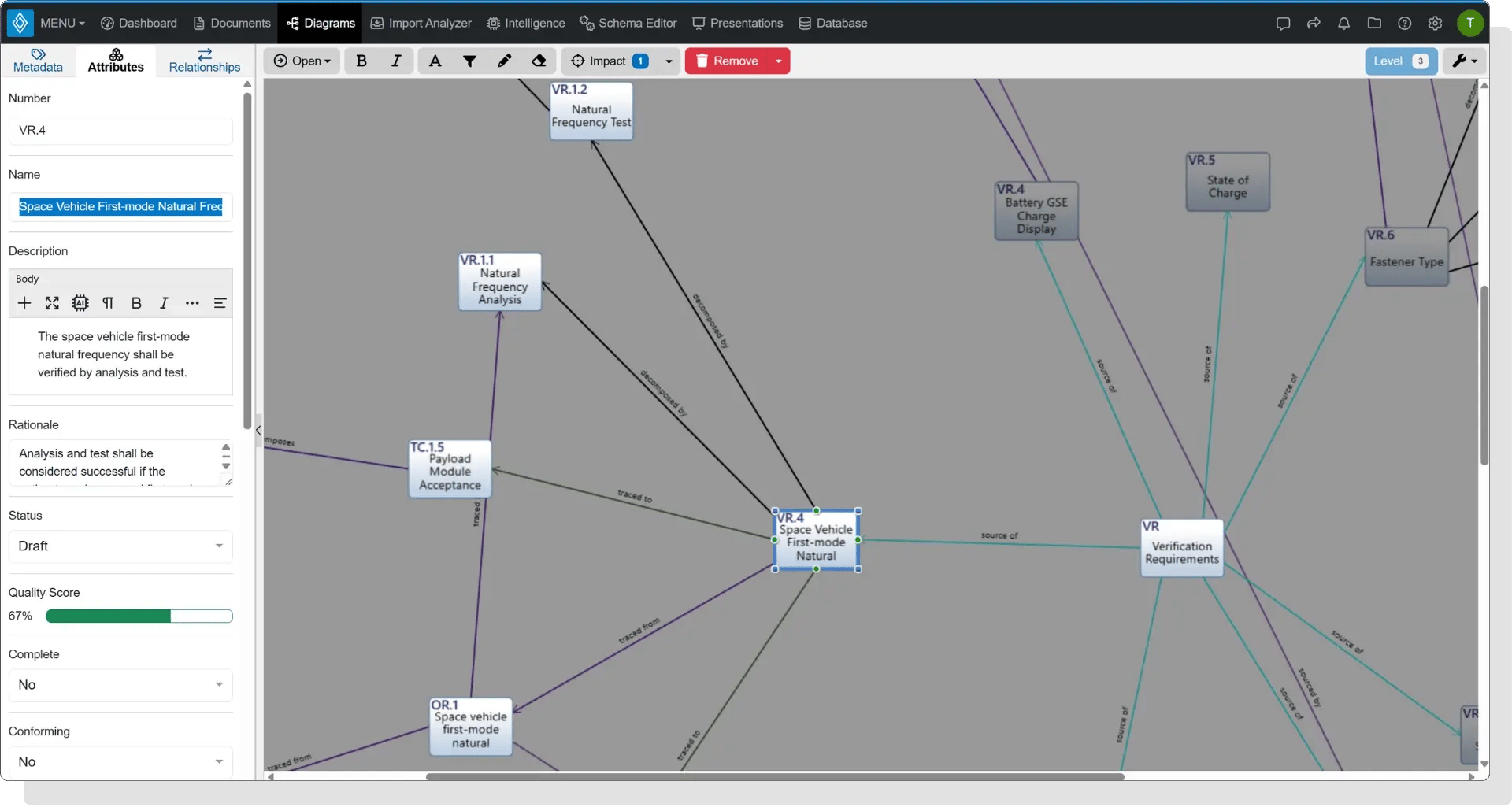
High-quality requirements depend on informed decisions. When engineering data is scattered across documents, spreadsheets, emails, and disconnected tools, it's difficult to understand the full context behind a requirement or assess the impact of a change.
Digital engineering brings requirements, architecture, verification activities, risks, interfaces, simulations, and other engineering artifacts together in a connected environment. With connected engineering data, teams can:
Evaluate design tradeoffs with greater confidence
Understand how changes affect downstream requirements and system components
Identify potential risks earlier in the development process
Reduce errors caused by incomplete or outdated information
Improve collaboration across engineering disciplines
Effective engineering lifecycle management depends on having complete, connected engineering data. When requirements remain linked to design models, verification activities, risks, and project information, teams can make informed decisions throughout development rather than relying on disconnected documents and manual updates.
This reflects guidance in DoD Instruction 5000.97, which encourages the use of digital engineering practices to improve collaboration, information sharing, and decision-making throughout the acquisition lifecycle.
Digital engineering and Model-Based Systems Engineering (MBSE) work together to improve requirements quality.
MBSE provides structured system models that describe behavior, architecture, interfaces, and relationships. Digital engineering expands on this by connecting those models with additional engineering data across the lifecycle.
Together they help organizations:
Reduce manual documentation
Improve consistency across teams
Strengthen traceability
Support impact analysis
Improve requirements verification
Enable better engineering decisions
For organizations adopting MBSE, integrating requirements into the model-based environment is often one of the most valuable first steps. Academic research on the state of digital engineering emphasizes that combining MBSE with connected engineering data enables greater collaboration, improved traceability, and better lifecycle management.

Modern digital engineering platforms simplify requirements management by bringing engineering information together into one connected environment. This supports engineering lifecycle management by enabling teams to manage requirements, architecture, verification, risks, and project information from a single source of truth.
With Innoslate, organizations can:
Capture stakeholder needs and system requirements
Maintain bidirectional traceability
Connect requirements to architecture and MBSE models
Perform impact analysis
Link requirements to verification activities
Manage changes throughout the lifecycle
Collaborate across distributed engineering teams
Instead of maintaining disconnected spreadsheets and documents, engineering teams work from a shared digital thread that improves visibility, consistency, and decision-making.
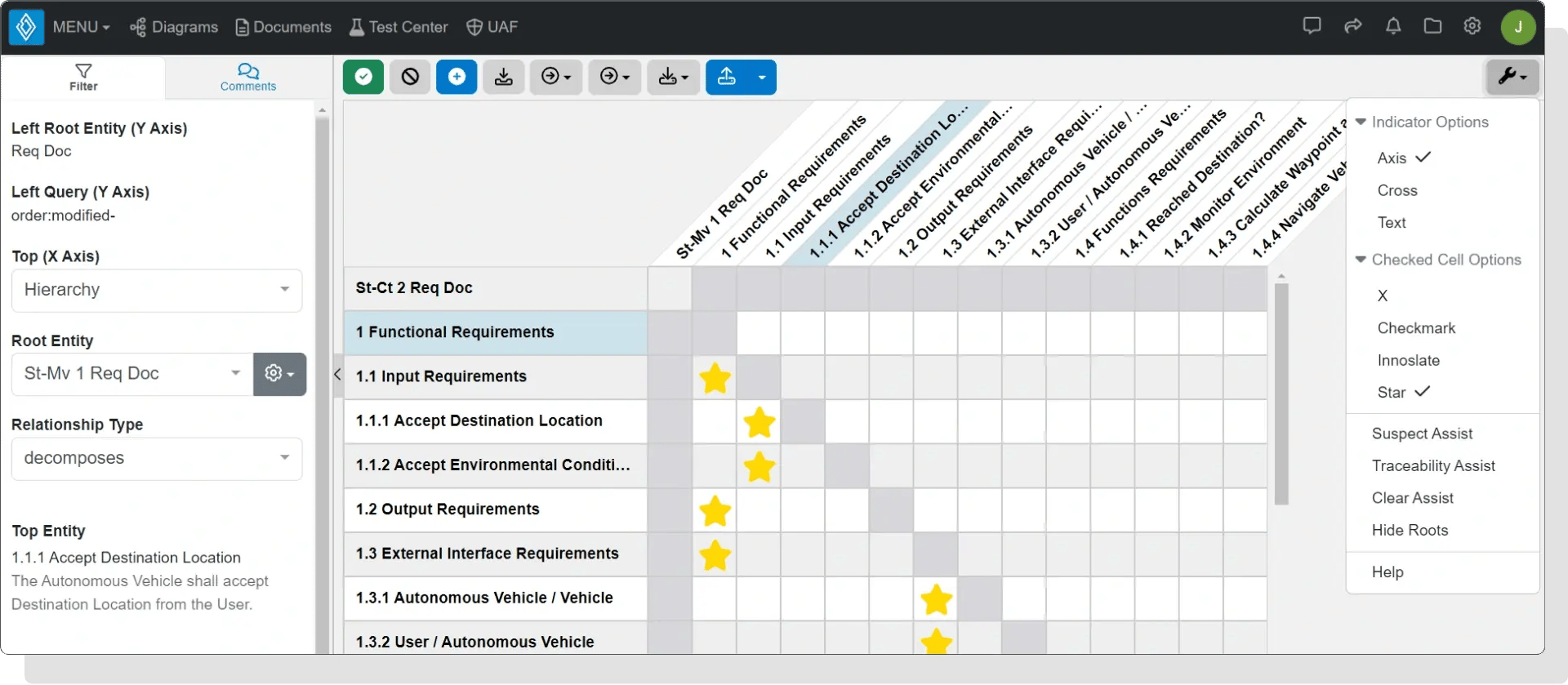
High-quality requirements don't happen by accident. They result from connected processes, collaborative workflows, and complete lifecycle visibility.
Digital engineering helps organizations improve requirements quality by eliminating disconnected information, strengthening traceability, simplifying change management, and supporting continuous verification from concept through sustainment.
As systems engineering programs continue to grow in complexity, adopting a digital engineering approach provides the foundation needed to build better systems with greater confidence.
Explore our Digital Engineering Glossary to understand key concepts and terminology.
Read our Ultimate Guide to Requirements Management to learn best practices for creating and managing high-quality requirements.
See how Innoslate connects digital engineering, requirements management, and MBSE with a free Forever Sandbox.
Steven Dam : 7/20/26, 1:45 PM
Modern engineering projects generate thousands of interconnected pieces of information. Stakeholder needs evolve, requirements change, architectures...

.svg) SPEC Innovations Team : 8/24/26, 12:02 PM
SPEC Innovations Team : 8/24/26, 12:02 PM
Aerospace programs generate thousands of interconnected requirements spanning mission objectives, system architecture, hardware, software,...

.svg) Taylor Duffy : 8/2/24, 3:35 PM
Taylor Duffy : 8/2/24, 3:35 PM
Tracking and meeting requirements is necessary for any successful project in systems engineering and requirements management. This is where a...